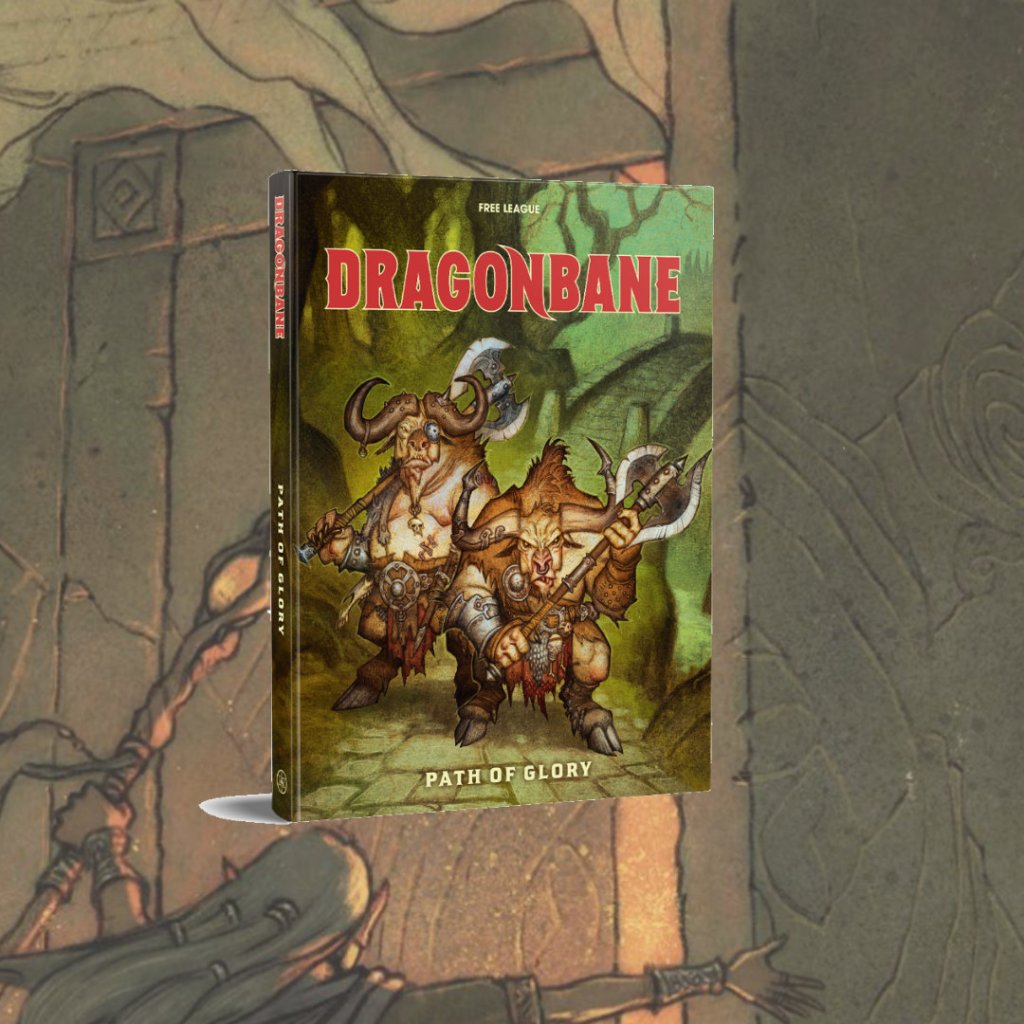
Of the various medieval fantasy games currently on the TTRPG market, Dragonbane grasped my interest most firmly due to the inclusion of a full campaign in Free League’s excellent Core Set. A bit over a year later, Dragonbane now has a second adventure campaign to explore: Path of Glory.
Like Dragonbane itself, Path of Glory is a Swedish classic brought out of the 80s and made available to international audiences in English for the first time. In this campaign, the players seek to open the legendary Gates of Power and discover what untold treasures lie within. While not strictly a “sequel” to Secrets of the Dragon Emperor in the Core Set, the difficulty in Path of Glory is explicitly designed for player characters who completed that campaign or who acquired equivalent experience.
Without further ado, then, let’s set off on the path!
Disclaimer: I received a free PDF of this product in exchange for an honest review. Thank you, Free League! This review may include minor spoilers—I’ve tried to avoid them as much as possible, but it’s difficult to comment on a few narrative elements and remain 100% spoiler-free.
What’s Inside Path of Glory?

Path of Glory is a 164-page adventure campaign illustrated in full color. It includes a trilogy of three connected adventures:
- The Dead Forest
- Gates of Power
- Heart of Darkness
Well, I say “three” adventures, but in practice Path of Glory contains quite a bit more. Like Secret of the Dragon Emperor in the Core Set, these adventures are largely structured around Free League’s signature “adventure site” exploration model. Regarding each site as its own short adventure, Path of Glory contains ten adventures, plus a single larger dungeon. In addition, the book includes a dash of extra background material, sidebars about the Demonology and Necromancy magic disciplines, and extensive encounters while exploring the campaign’s new lands.
Dragonbane’s “old school meets new” design philosophy is prominent throughout the work. All three sections are centered on dungeon exploration as the primary game activity. The nods to negotiation, roleplayed drama, and other non-violent interactions are not trivial. They also are not a focal point. Some groups may find adventuring at these sites to feel rather similar, though the stories rarely feel wholly about smash-and-grab murderhobo-ing. A few exceptions stick out favorably—like getting sucked into a large-scale battle—and help add texture to the campaign.
The overall plot is staple swords & sorcery fare, though it manages to get the themes a bit muddled. As the opening narration to “The Dead Forest” states, “You have come in search of wealth and glory, but more than that, the mystery of why the heart of this vast forest is withering and dying has enticed you” (Path of Glory, page 9). Throughout the story’s focus seems rather more on “untold riches” than on breaking the curse, with saving the world as a bit of a side effect. (I’m reminded of Bilbo’s treasure-laden homecoming in The Hobbit.) Combined with the presence of various treacherous and avaricious non-player characters throughout the narrative, the infrequent attempts to frame the player characters as true-hearted heroes feels odd. It feels like Dragonbane is a world which you save because it makes sense—can’t spend treasure if it’s destroyed, y’know—rather than due to selfless heroics.
Despite this, the campaign’s narrative is in no way “bad,” nor even “mediocre.” It’s rather straightforward, sure, but straightforward TTRPG adventures focus on the players, not the story. With the modern trends toward subversion, surprise, and heavy narrative, I quite like the old-school storytelling of Dragonbane’s first standalone campaign.
Interested in exploring an adventure by yours truly? To Hunt a God for RuneQuest sends adventurers into a mythic forest on a desperate heroquest to perform divine euthanasia. Acclaimed as “one of the absolute best products available for the Jonstown Compendium,” adding it to your TTRPG library is a great way to help support the site!
Production
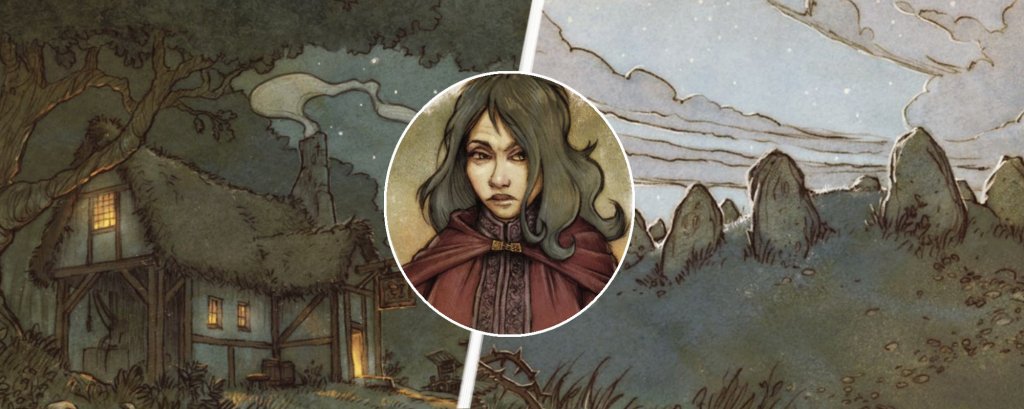
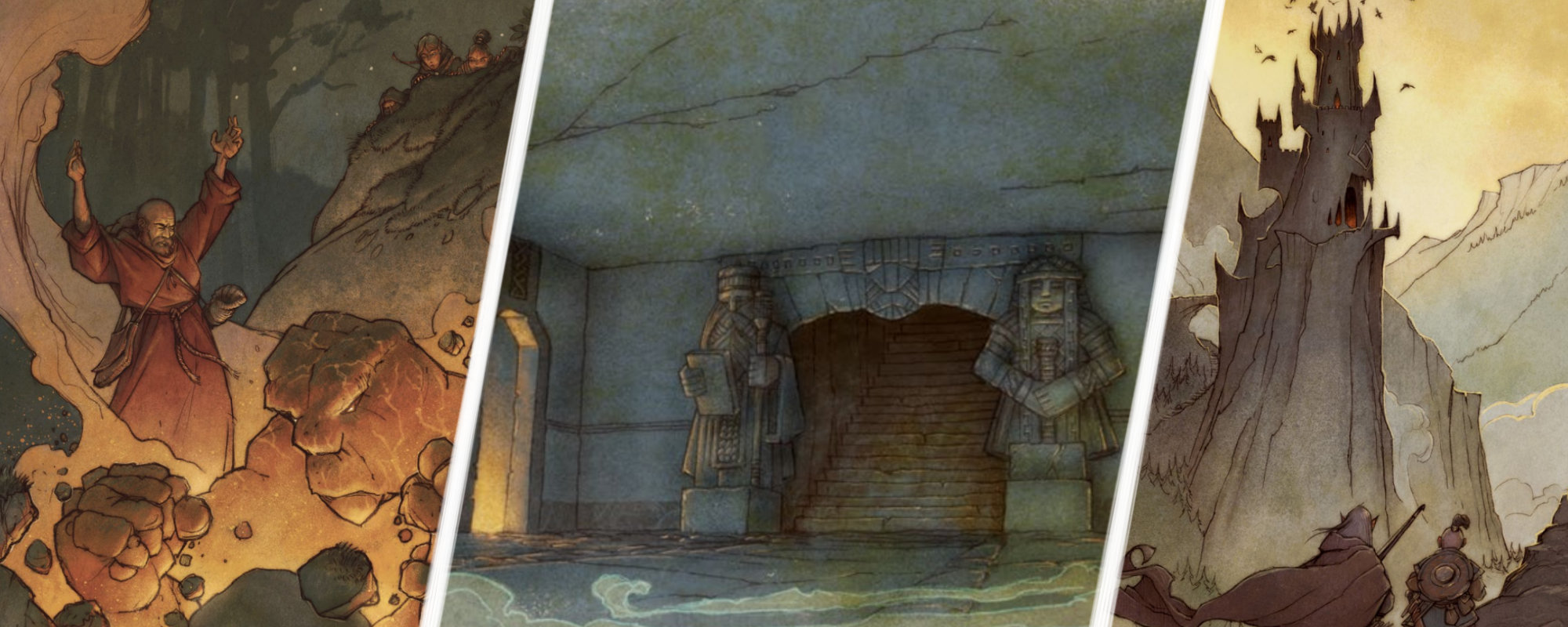
Path of Glory focuses on the book’s utility, and does so beautifully. The illustrations focus on non-player character portraits in conjunction with occasional scene-setting panels. In the adventures’ text, the gamemaster is often directed to share illustrations with the players, and is provided with their page number for ease of use if the illustration is included elsewhere.
Indeed, the work is heavily cross-referenced, most frequently when a random encounter connects with an adventure site. Layout further supports ease of use through clear and direct dungeon presentation. For example, red headings in room descriptions jump out and let the gamemaster know “hey, there’s something you need to know right now which could hurt the player characters.” Clean pagination combined with effective sidebar placement also strengthens the overall presentation.
Excellence in layout and book structure is often overlooked because it’s practically invisible when done well. So let’s offer some public kudos to Dan Algstrand—well done!
Compared to recent works from Free League, the text of Path of Glory could use a bit more polishing. It is well-edited, but there’s a few inconsistencies in formatting (such as the typeface of weapon qualities, like subtle) which I don’t recall from the Core Set. It also feels like a few sections, like the Foreword, may have been completely overlooked by the editor. I’m reading from a pre-release PDF, so it’s possible these have been corrected. However, this same PDF edition is also publicly available from Free League to customers who pre-ordered the hardcover on their site.
Conclusion
A number of odd decisions are present throughout this campaign. For example, from the Foreword it appears that Path of Glory is named after the battle-cry (“We get glory!”) of two minotaurs in an inconsequential random encounter. Featured in the cover illustration, these characters nonetheless fill exactly one page of the book. I’m reminded of the Gamemaster Screen Pack for RuneQuest, in which the adventure “Return to Apple Lane” somewhat falls flat if you lack nostalgia for the 1980 original. This campaign is not about minotaurs at all, though perhaps that duo was a fan-favorite in 1980s Sweden.
On a more serious note, there’s a peculiar use of a dragon which, while clearly meant to be awe-inspiring, instead just left me sort of underwhelmed. (Likely due to its connection to a deus ex machina which, I suspect, most gamemasters will simply ignore.)
That said, I’m poking at these blemishes because the frank reality is that there’s very little to criticize about Path of Glory. I’m not quite convinced we’ll look back on it as an English-language TTRPG masterpiece in 40 years—but that’s a terrible metric for a book’s quality! Overall Path of Glory is an excellent campaign which every Dragonbane fan should buy. If you liked the Core Set, Path of Glory is “more of the same” in a very positive way. I’d guess that it’ll provide somewhere around 15-20 sessions of play, aiming at three to four-hour sessions (but I’d not be surprised if it ran longer).
If you’re so-so on Dragonbane as a game system, I wouldn’t worry too much over Path of Glory. (I might question your TTRPG taste, but that’s a different rant.) It’s quite likely I’ll adapt this to RuneQuest for my game group, but that’s because Dragonbane converts easily to D100 games. I do like it, and I want to run it, but Path of Glory isn’t one of those superlative campaigns worth adapting to everything.
(Unless you’re a game designer—in which case, it probably is worth studying the layout and dungeon presentation!)
Path of Glory released on November 12th, and is available in hardcover directly from Free League for $41.80, which also includes a free PDF through DriveThruRPG. (The price might change a little, since the site is converting from Swedish kroner.) Path of Glory is also available in PDF on DriveThruRPG.
Want to keep up-to-date on what Austin’s working on through Akhelas? Go ahead and sign up to the email list below. You’ll get a notification whenever a new post goes online. Interested in supporting his work? Back his Patreon for early articles, previews, behind-the-scenes data, and more. Or head over to DriveThruRPG to peruse his publications!
You can also find Austin over on Facebook, and increasingly more often on Twitter.
 Akhelas