Continuing on from last week’s review of The Lightbringers, this week we’re going to delve into the powers of Life and Death described in The Earth Goddesses. This is book is the third book in Chaosium’s Cults of RuneQuest series, and was released a few weeks ago simultaneously with The Lightbringers. While this week we’re going to focus on The Earth Goddesses, next week I’ll take a step back and take some time to reflect on the books not as a critic, but as a Jonstown Compendium designer.
As I mentioned last week, despite my fairly extensive history working in Glorantha these books are actually the first time I’ve been exposed to RuneQuest’s longform cult writeups en masse. Consequently my goal in these reviews is to consider the new books from the perspective of the current edition of RuneQuest. While I have some familiarity with retro material (like Trollpak) it’s not really my strong point. I’ll leave that sort of comparative or analytic work to commentators who are better informed and more strongly motivated!
what’s Inside?
The Earth Goddesses has a lot in common with its husband-book, The Lightbringers. Rather than repeat myself on topics such as the style of playable content provided by the Cults books, I’ll direct you to skim last week’s review instead. I feel my time—and yours!—is better served by discussing content exclusive to The Earth Goddesses. I’ll use my Lightbringers review as an exemplar for the series’ strengths and weaknesses unless future releases substantially deviate.
The Earth Goddesses is a 146-page book which describes fourteen different RuneQuest cults. The focus is primarily on deities associated with the Earth Rune, although there are some exceptions. Like the Lightbringers of book one, book two’s focus is on the Earth religion. This is embodied in Ernalda the Earth Mother and her associated goddesses (such as Ty Kora Tek the Underworld Goddess, or Eiritha the Herd Mother). Creativity and destruction are expressed in equal potency by this religion. The setting’s emphasis is on Fertility, but I suspect the more destructive goddesses—like Maran Gor the Earthshaker—will prove more popular among players due to their crazy magic and weird associations.
Also, like, dinosaurs. C’mon.
Our outlier cults are those with similar Runic associations, but which exist outside the rough defines of the Earth religion. This includes villain cults such as the Bloody Tusk as well as player-friendly cults like Donandar the God of Music (which, by the way, has one of my favorite illustrations).
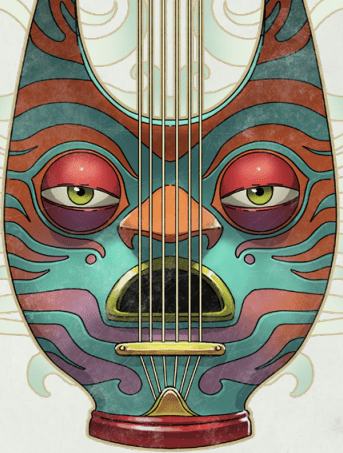
Like the previous book, The Earth Goddesses is replete with a variety of flavorful details. Off the top of my head some favorites include the sacredness of twins to Caladra and Aurelion, the image of water mixing with clay as a form of Love recognized by Uleria, and the cringe-inducing initiation rite for humans joining the cult of Aldrya (normally worshiped by plants, not mammals). Honestly, the whole Aldrya section is pretty great—a flavorful and comprehensive description of the goddess which structures Aldryami society. Its description of Aldryami social structure, shamanism, and their subjective experience of the God Time makes me really think that players should consider bringing Aldryami to the table. While a single chapter would never reach the breadth of the entire Trollpak, between this cult and the Aldryami section of the Glorantha Bestiary the elves have joined ducks, trolls, and morokanth on my list of player-friendly non-human species.
Another cult worth discussing is the Grain Goddesses. This collection of similar Fertility deities isn’t a cult I’d recommend to players, but it doesn’t need to be. Instead, the cult is used to provide greater detail to agricultural practices across Glorantha. In a sense, it feels like a “cult of ordinary people” in contrast to the many extraordinary cults favored by players.
While The Earth Goddesses does have a lot of cool content, I did feel a little underwhelmed. Perhaps I was spoiled by The Lightbringers, but my reading experience was that I kept wanting a little more information with a number of sections. The cult of Ernalda is a strong example. Like Orlanth, Ernalda is the leader of a pantheon, one of the Great Gods of the entire setting. Yet I felt her description was short; and compared to Orlanth’s 24 pages, Ernalda gets only 14. Further, about a third of that describes Ernalda’s associates and husbands. Now, I’m not saying the Earth Mother shouldn’t have a full boudoir to pick from—but I do wish her cult had been more about her. How is the Feathered Horse Queen selected? What more can I learn about how the Earth is the source of sovereignty—of, perhaps, Mastery? How does the cult’s leadership in Esrolia alter social structure? What are the requirements to become a High Priestess? I do like the cult description, but I also feel that it’s a bit shallow compared to the deep, deep well of Ernalda’s husband.
This example retains for some other cults, too. Compared to Aldrya, I felt the Mostal description left me unsure how to play the species. Some of the destructive goddesses mention sacrifice of sentient beings, but don’t describe the dire circumstances in which such a rite is carried out. Donandar’s Puppeteers must perform for free, but their fee is later described as extravagant.
Overall, The Earth Goddesses’ content is indeed quite good, but I found it a little lacking compared to the prior book. You could populate a whole adventuring party from just cults in this book—which was a pleasant surprise—when considering adventurer “roles” in a group. If you have to pick between the two, I’d recommend The Lightbringers as a bit more diverse (but really, I do suggest planning to pick up both eventually).
In terms of textual polish, The Earth Goddesses disappointed me. There are, of course, challenges to editing and proofing RuneQuest material. Trust me, I am intimately aware of the challenges of writing and polishing text for this game. I’m not saying I’m a master editor, but this is a topic I understand well. And I do feel Chaosium dropped the ball. References to POW instead of magic points, the Life Rune instead of the Fertility Rune, inconsistencies between the Brew spell and the Craft (brewing) skill, and similar preventable errors mar an obvious labor of love. With how much devotion and care Chaosium puts into the visual design of these books, it honestly feels tragic that the text isn’t treated with the same respect.
Were 33 new cults somehow not enough? Looking for EVEN MORE religions in your Glorantha? Check out my cult & adventure combo To Hunt a God on the Jonstown Compendium! Available in PDF, softcover, and hardcover.
Illustrations
As with The Lightbringers, the visual content of The Earth Goddesses is absolutely superb. This work has a couple more butts (as befits the Earth religion), but no hesitations in quality. The Earth Goddesses illustrations are simply stupendous. Like the prior book, this work does an excellent job juggling styles, presentations, and content to create an attentive visual atmosphere evoking the fantasy world. Through all three installments in Cults of RuneQuest the artwork has impressed, and I’m excited to see what wonders Chaosium next has for us.
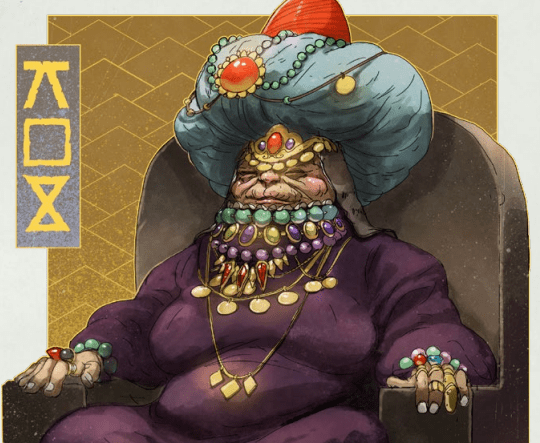
Each section continues to be introduced with a depiction of the cult’s deity, and most sections include a half-page illustration of the divine or a piece of spot art depicting objects, locales—such as a mine cutaway—votive offerings, and so on. There’s a bit less art than in The Lightbringers, I think (I don’t have my physical copies yet, so comparing the documents is a little tricky), and fewer plates, but the quality remains excellent and the frequency high enough to achieve the desired effect on the viewer.
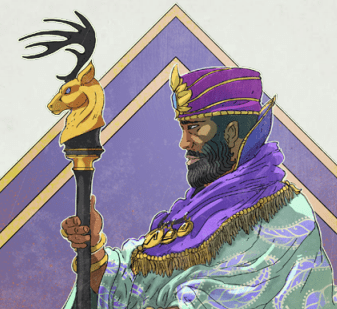
There’s also a few reused pieces from prior publications, including one of my favorite illustrations of women farming from the RuneQuest core rules. Really, throughout I feel that Chaosium has upped their game not just in art quality, but also in the depiction of women. Ernalda isn’t “sexy lady;” she’s a mother. In contrast, the panel of Babeester Gor is deliciously morbid.
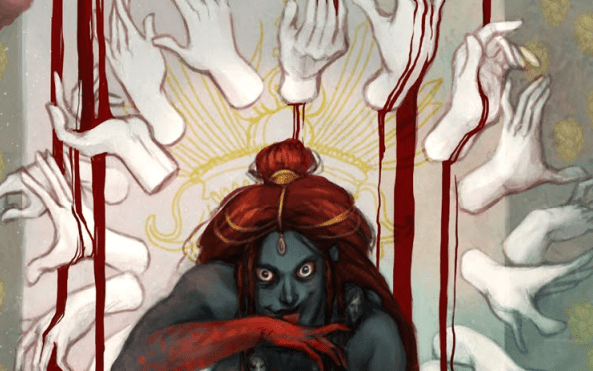
The Earth Goddesses really nails the depiction of its covered material. The beautiful presentation and thoughtful art direction are significant strengths.
Conclusion
I feel The Earth Goddesses is marketed to the same audiences (players, gamemasters, fiction readers) as The Lightbringers, and my recommendations are largely the same. By way of swift comparison, I’d say Earth is an easy 5/5, whereas for me Lightbringers breaks into 6/5 .
For players I think this book offers a number of exciting new options, and provides additional details for some of the coolest cults in the core rules. If any of the deities I’ve mentioned (or which are mentioned in Chaosium’s blurbs) sound cool, that’s a good enough indicator that you’ll enjoy this book.
For gamemasters I likewise agree with Chaosium: you need this book. The Earth Goddesses provides a lot of useful context and inspiration for creating your Glorantha. Together, these two books lay a really impressive foundation for gaming in the setting.
For readers once again I’m not entirely convinced. Again, I think this isn’t a great marketing decision. The elements which make a book of creative mythology (like The Gods of Pegana by Dunsany, or Gaiman’s Norse Mythology) powerful are storytelling elements which aren’t in—and don’t need to be in—a game book.
Overall, The Earth Goddesses is a rock-solid release (pun intended), which lays the foundation for more mythic adventures exploring the Earth religion in Glorantha. While not as comprehensive as The Lightbringers, it’s still a valuable addition to your shelf, and heartily recommended.
Until next time, then!
Want to keep up-to-date on what Austin’s working on through Akhelas? Go ahead and sign up to the email list below. You’ll get a notification whenever a new post goes online. Interested in supporting his work? Back his Patreon for early articles, previews, behind-the-scenes data, and more.
You can also find Austin over on Facebook, and a bit more rarely on Twitter.
 Akhelas
2 thoughts on “REVIEW: The Earth Goddesses”